
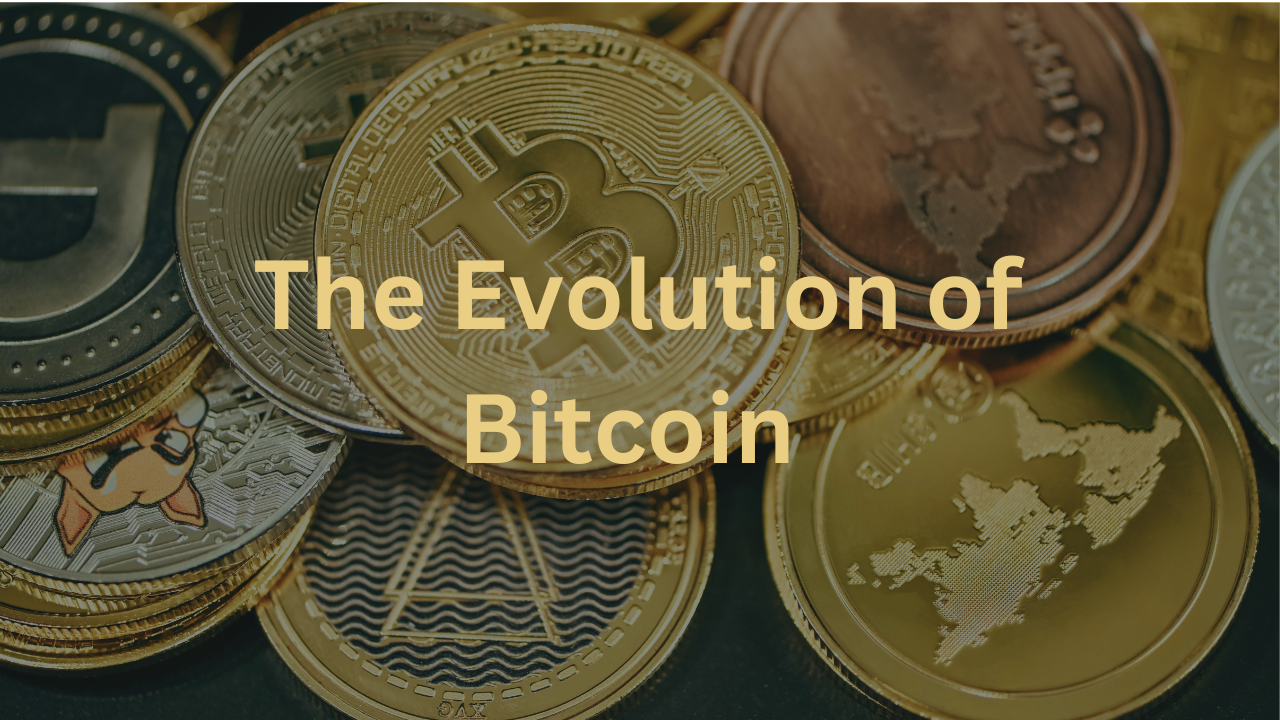
Bitcoin, the world’s first decentralized digital currency, has come a long way since its introduction in 2009. What started as an obscure, experimental currency discussed by a small group of cryptography enthusiasts has evolved into a global financial phenomenon, disrupting traditional finance and capturing the attention of governments, institutions, and retail investors worldwide.
In this blog, we explore Bitcoin’s journey from its inception to becoming a widely recognized digital asset, its impact on global finance, and its potential future.
The Inception: A Solution to a Broken System
The seeds of Bitcoin were sown during the 2008 global financial crisis, a time of severe economic turmoil, when trust in traditional banking systems and financial institutions was at an all-time low. On October 31, 2008, an anonymous figure or group known as Satoshi Nakamoto released the Bitcoin whitepaper titled “Bitcoin: A Peer-to-Peer Electronic Cash System.”
Nakamoto’s vision was to create a decentralized currency system that operated independently of central banks and governments, enabling individuals to transfer value directly without the need for intermediaries. At its core, Bitcoin was a response to the centralized financial systems that many believed were responsible for the crisis.
On January 3, 2009, the Bitcoin network went live with the mining of the first block, known as the Genesis Block. Embedded within this block was the now-famous message: “The Times 03/Jan/2009 Chancellor on brink of second bailout for banks.” This was seen as a commentary on the financial instability and the need for a new system that could resist manipulation by central authorities.
The Early Years: Bitcoin as a Niche Asset
In its early days, Bitcoin was far from mainstream. It was primarily used by a small group of enthusiasts and developers who were interested in cryptography, distributed systems, and the concept of decentralized money. For the first few years, Bitcoin’s value was negligible, and it was mostly exchanged on obscure forums and websites.
In May 2010, Bitcoin gained more visibility with the now-legendary Bitcoin Pizza Day. A programmer named Laszlo Hanyecz made the first-ever real-world transaction using Bitcoin, purchasing two pizzas for 10,000 BTC. At the time, this amount was worth roughly $41. Today, those same 10,000 BTC would be worth hundreds of millions of dollars, highlighting the extraordinary appreciation of Bitcoin’s value over the years.
Bitcoin also began to attract attention in less favorable ways. Its association with the now-defunct online black market Silk Road earned it a reputation as a currency for illegal transactions. This narrative persisted in Bitcoin’s early years, reinforcing its position as a fringe asset with limited appeal to the general public.
2013-2017: Entering the Public Consciousness
Bitcoin’s breakout moment came in 2013, when its price surged from under $100 to over $1,000 within a matter of months. This spike was driven by a combination of factors, including increased media coverage, growing adoption by merchants, and speculation by retail investors. Bitcoin was no longer just a niche asset for cryptography enthusiasts; it had entered the public consciousness.
However, Bitcoin’s rise was not without setbacks. In 2014, the cryptocurrency exchange Mt. Gox, which handled over 70% of Bitcoin transactions at the time, was hacked, resulting in the loss of around 850,000 BTC. The fallout from this event led to a sharp decline in Bitcoin’s price and raised serious questions about the security and legitimacy of cryptocurrency exchanges.
Despite these challenges, Bitcoin continued to grow, both in value and adoption. In 2015, the Ethereum network was launched, bringing smart contract functionality to blockchain technology and further expanding the cryptocurrency space. Bitcoin remained the dominant digital asset, but it was clear that the broader blockchain ecosystem was beginning to take shape.
The period between 2016 and 2017 marked another milestone in Bitcoin’s journey. Institutional investors began to take notice, and Bitcoin’s price once again skyrocketed, reaching nearly $20,000 by the end of 2017. This rally was fueled by a combination of retail investor speculation, media hype, and the rise of initial coin offerings (ICOs) built on blockchain technology.
The 2020-2021 Bull Run: Bitcoin Goes Mainstream
The COVID-19 pandemic in 2020 acted as a catalyst for Bitcoin’s most significant bull run to date. As governments around the world implemented aggressive monetary policies, including quantitative easing and low interest rates, many investors began to view Bitcoin as a hedge against inflation and economic uncertainty.
This period saw institutional adoption on a scale previously unseen. Companies like MicroStrategy and Tesla made significant investments in Bitcoin, while PayPal and Square introduced Bitcoin trading to millions of users, making it easier than ever for retail investors to buy and hold the digital asset. Additionally, Grayscale’s Bitcoin Trust and other financial products allowed institutional investors to gain exposure to Bitcoin without directly holding it.
By late 2020 and early 2021, Bitcoin’s price surged past its previous all-time high of $20,000, eventually reaching over $60,000 in April 2021. The narrative around Bitcoin had shifted: it was no longer just a speculative asset but was increasingly viewed as a store of value and a legitimate investment vehicle, akin to digital gold.
Bitcoin’s Impact on Global Finance
Today, Bitcoin has firmly established itself as a key player in the global financial ecosystem. It is recognized as a legal currency in countries like El Salvador, where it was adopted as legal tender in 2021, making headlines around the world. Bitcoin ATMs, exchanges, and financial products have proliferated, and the asset is now held by both retail investors and institutional players, including hedge funds and corporations.
Furthermore, Bitcoin has had a profound impact on the broader financial industry, driving the development of decentralized finance (DeFi), tokenization, and blockchain-based financial services. It has prompted governments to explore central bank digital currencies (CBDCs), which could transform the way we think about money and financial systems.
However, Bitcoin remains a highly volatile asset, subject to sharp price swings and ongoing debates about its scalability, environmental impact, and regulatory status. Critics argue that it is still primarily used as a speculative asset, while supporters continue to see it as a revolutionary form of money that could reshape global finance.
The Road Ahead
As Bitcoin continues to mature, its role in the global financial landscape will likely expand. Regulation will play a key role in determining how Bitcoin is integrated into traditional financial systems, with governments around the world grappling with how to regulate and tax digital assets without stifling innovation.
Bitcoin’s potential as a store of value, payment method, and tool for financial inclusion in developing countries are just a few of the areas where it could continue to have a lasting impact. Its future will depend on both technological innovations—such as scaling solutions like the Lightning Network—and its ability to gain further trust among investors and governments.
Conclusion
From its humble beginnings as a niche digital currency, Bitcoin has grown into a global phenomenon, shaping the future of finance and technology. Its evolution has been marked by incredible highs and significant challenges, but its influence on the financial world is undeniable. As Bitcoin continues to develop, it will remain a key part of conversations about the future of money, offering opportunities and risks for those who choose to participate in this ongoing financial revolution.